Bird Watching on Marco Island

Bird Watching Roseate Spoonbill
Home » Bird Watching on Marco Island

Key Takeaways

  • Bird watching on Marco Island features species like ospreys, pelicans, and burrowing owls, making it a rewarding experience.
  • The Great Florida Birding Trail includes Tigertail Beach Park and other nearby locations ideal for bird enthusiasts.
  • The snowy egret and great blue heron are common sights on Marco Island’s beaches, offering great photo opportunities.
  • Visitors can observe nesting least terns and black skimmers during their breeding seasons along the coast.
  • Sea Mar Condo provides a perfect base for bird watching on Marco Island, with easy access to eco tours and scenic views.

Bird Watching on Marco Island

Marco Island’s beautiful birds are one of the island’s greatest assets.  Bird watching on Marco Island is especially rewarding.  There are many species native to the island.

Marco Island Ospry

I photographed this osprey posing on Tigertail Beach.  These majestic birds are not normally people friendly. However, this one seems to enjoy the attention!!  If you are like me, it is special to capture a beautiful photo.  What a precious vacation memory!  This osprey’s picture is in Sea Mar Condo for our guests to enjoy!

There are many birds which are native to Marco Island and the southern Florida area. Birds that are common on Marco Island include the white egret, osprey, pelican, bald eagle and burrowing owl.

The Great Florida Birding Trail

Tigertail Beach Park is located on the Great Florida Birding Trail. It is a nice place to see and photograph many species of birds. There are also other bird watching sites around Marco Island. They include Rookery Bay National Estuarine Research Reserve and Briggs Nature Center.  Frank E. Mackle Jr. Park, Eagle Lakes Park and Sugden Regional Park are also good.  It is a  short 40 minute drive to Big Cypress Welcome Center. Turner Loop Road near Everglades City is also a great birding site.

Burrowing Owls on Marco Island

Burrowing Owls at Resident's Beach

Marco Island has been recognized by the Audubon Society for their efforts to increase numbers of burrowing owls. The small owls are protected by both the state of Florida and the city of Marco Island.  Many residents volunteer to adopt the owls. They offer protective housing (borrows) for these beautiful birds. The owls are given a wide roped off space, but are yet visible to visitors.  Hint: They tend to pose for pics in the morning and late afternoon hours. See our related post Burrowing Owls on Marco Island. https://seamarcondo.com/burrowing-owls-on-marco-island

Osprey on the Island

Around Marco Island, you will likely see large osprey nests built of sticks. They are often on channel markers.  Ospreys have a large brown back and a white underside.  Visitors to Marco Island see these birds soaring around condo buildings and over the Gulf waters.  They are very large with wingspans of between 4-5 feet.  Ospreys soar above the shallow water along the beach. Then they hover briefly before diving feet first to grab a fish.  The bird then takes off with its fish, carrying it back to its nest. It is not uncommon to see ospreys perched on a building. They are also commonr along the beach on driftwood in the Tigertail area.

Lots of Pelicans on Marco Island

Brown Pelicans

Marco Island Brown Pelican

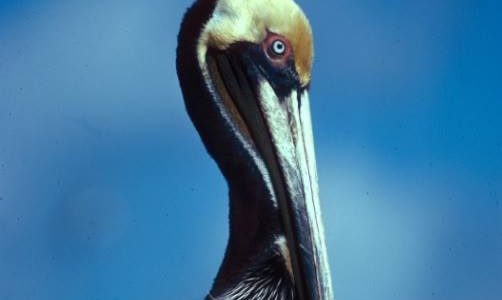
This is my favorite bird to watch on Marco Island!  What fun it is to see these impressive divers circling high above the Gulf waters. I love seeing them dive headfirst in search of the perfect feast.  Often you will see the brown pelicans fly in group formation. They normally fly in a V-shape along the water.  Pelicans are plentiful on Marco.  It is common to be in the water and see one swoop close by.  The pelican expands its throat pouch (gullet) to trap fish, filling it with over 2 gallons of water. Then it enjoys a tasty meal!  A friend of mine took the picture to the left as we left on a Marco Island Princess dinner cruise.  This picture is also in Sea Mar Condo for our guests to enjoy!  See our full article on The Brown Pelican at https://seamarcondo.com/marco-island-wildlifethe-brown-pelican.

White Pelicans

The White Pelican is the largest bird in North America.

More rare to spot on Marco Island are white pelicans. They arrive in the area in late fall and stay until the early spring.  The white pelican has white feathers and a pink-tangerine colored bill. This beautiful bird is the largest bird in North America. Isolated areas like mangrove islands are preferred habitats. These birds are shy and less social.  Your chances of seeing a white pelican are better during a boat tour of the 10,000 islands with binoculars.  White pelicans work as a team to herd their food prey,  fluffing their wings to assemble and gather the fish.

Bald Eagles on Marco Island

Marco Island Bald Eagle

Marco Island Nature Preserve is home to the island’s nesting American Bald Eagles during nesting season.  The preserve is located at 665 Tigertail Court, Marco Island, FL.  This organization works alongside volunteers of Marco Island to guarantee the safety of active Bald Eagle nests.  Visitors may visit during nesting season between November and May.

The Marco Island Nature Preserve & Bird Sanctuary also has a Facebook page https://www.facebook.com/MarcoIslandNaturePreserveThe page has lots of great information on these majestic birds and their activity.

Roseate Spoonbill

Pink Spoonbills in Flight

Birdwatching on Marco Island is more exciting with color!  My favorite bird around Marco and the 10,000 island area is the roseate spoonbill.  The spoonbill is a beautiful pink wading bird. Although rare to see on Marco, they are sometimes spotted near Tigertail Lagoon.  Visitors taking eco tours of the 10,000 islands commonly get to see the roseate spoonbill.  Besides Tigertail Lagoon, my sightings include one on a boat tour a few years ago and again on a drive along Turner Loop Road in the Everglades.

The roseate spoonbill has bright pink feathers and red eyes with a giant spoon-shaped bill.  These birds are especially beautiful in flight flying with their outstretched necks.  A couple of neat facts about the spoonbill:  They bald as they mature by losing feathers from the top of their head.  And, their pink color comes from the crustaceans they eat. The crustaceans contain pigments called carotenoids that turn their feathers pink.

See our related post on Exploring the Habitat of the Roseate Spoonbill: https://seamarcondo.com/marco-island-wildlife-the-roseate-spoonbill

Least Terns Nesting on Marco Island

Least Terns on Tigertail

The least tern is the smallest of the American terns.  They grow to a length of 8 1/2 to 9 inches with a wingspan of 21-23 inches.  Tigertail Beach on Marco Island is one of the largest least tern nesting areas in Southwest Florida. This bird has a gray back, black wings, a yellow beak and a white belly.  It also has pointed wings and a forked tail.  Least terns nest in colonies. They stay on sandy beaches with a path to the water.  They are also a threatened species.  Visitors to the island can walk along the north tip of Tigertail Beach during nesting season (April-August) and see large colonies of 200 or more least terns nesting. Roped areas protect the nests.  Signs give warnings to keep a distance from nesting birds.

Black Skimmers on Marco 

Black Skimmers

Black skimmers are on Marco Island year round.  The island has the largest black skimmer colony in the state of Florida.  Many black skimmers on Marco are banded to track movements, lifespans, and survival rate.  Black skimmers nest in large colonies around April-August on Tigertail Beach.  Visitors to Big Marco Pass during nesting season can see colonies of 400 or more black skimmers.  Roped areas keep visitors a safe distance from nesting birds.  Although normally a calm bird, the black skimmer will dive bomb anything getting close to a nest of newly hatched chicks.  During the winter months, visitors to the island will see black skimmers resting on the beach.

The black skimmer has a wingspan of around 45 inches.  They have a black back, white belly, orange-red legs, and a black-and-red bill.  Orange color on their bill and legs make them easy to spot.  Black skimmers fly very low above the water.

Snowy Egrets Along the Beach

Snowy Egret

It’s not often you walk along Marco Island’s beautiful beaches without one of these guys joining you!  They are known for their “strut” and “ruffled feathers”. The snowy egret can become quite comical in their appearance.  (Makes for a great photo!)  The snowy egret is a water bird. They are around 26″ tall with white feathers and a black bill.  It has black legs and bright yellow feet.  In spring, the egret has “fancy” lace-like feathers on its head and along its back for its showy displays of courtship.  Marco’s snowy egrets are very used to people. They will virtually “walk the beach” with you!

Great Blue Heron

Great Blue Heron

The great blue heron is the tallest of the wading birds.  It is slate blue in color with a white head, a black stripe above the eye, and a yellow bill.  This bird has a wing span of 65-79 inches.   Blue herons are solitary birds that are normally seen standing motionless in shallow water.  Tigertail Lagoon is a good place to look for this bird. Taking an eco tour or a drive to the Everglades along Turner Road is also a great way to see a great blue heron.

Anhinga (Piano Bird)

Anhinga

The Anhinga is a most unusual bird.  It swims with its webbed feet.  They also dive under water, and spear food by rapidly stretching out the neck.  Anhinga’s feathers are not waterproof as other types of water birds.  Their feathers get soaked when they are submerged in water, thus they cannot stay in the water for long periods of time.

The bird stands with it’s feathers fanned out to dry.  Anhingas also pridefully sit in trees with outstretched wings until they are dry enough to fly.  The male anhinga is glossy black with white tail feathers.  When outstretched, the bottom of the male’s wings have white strips that resemble piano keys. They are sometimes called “piano birds”.  The female is pale gray in color or light brown.  I took the picture of this bird at the Big Cypress Welcome Center along the boardwalk.

Anhinga diving

Sea Mar Condo is the Perfect Place to Stay for Bird Watching on Marco Island

Sea Mar Condo Logo

Sea Mar Condo is located on the south end of Tigertail Beach and the north end of Marco Island’s South (Crescent Beach).  Our 19th floor penthouse condo overlooks South Beach. It has beautiful views of the beach and Gulf waters.  We are a short 40 minute drive to Big Cypress National Preserve and Everglades City.  There are many guided eco tours of the 10,000 islands.  All of these areas are perfect for bird watching on Marco Island (and surrounding areas).  Visit our website https://seamarcondo.com for more information on Marco Island and Sea Mar Condo.  We would love to have you as our guests!
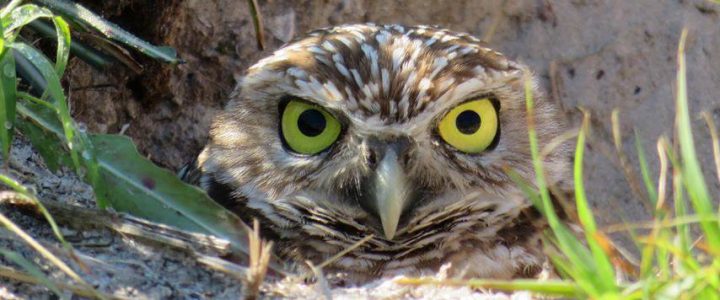
Burrowing Owls on Marco Island

Burrowing Owls on Marco Island
Home » Bird Watching on Marco Island

Key Takeaways

  • Marco Island is famous for its beautiful beaches and unique wildlife, particularly the Burrowing Owls.
  • Residents promote Burrowing Owl populations with help from the Burrowing Owl Society, ensuring protected nesting.
  • These small, sandy-colored owls live in burrows that they dig or take from other animals, hunting insects and rodents.
  • Burrowing Owls display interesting behaviors, such as storing food and attracting insects to their nests with dung.
  • They have a distinct lifestyle, hunting during the day and night, often living in close colonies and showing monogamous tendencies.

Marco Island is known for its beautiful beaches. However, one thing that makes the island really special is its wildlife.  One little creature is especially cute, and it is fairly easy to spot one on the island.

Many residents on Marco Island participate in encouraging the burrowing owl population. The Burrowing Owl Society provides starter packs for homeowners who want to encourage owls to nest on their property.  The owls are protected when actively nesting. Nests are inspected regularly.

Owls are unmistakable birds, and that goes double for a long-legged owl that hunts on the ground during the day. Burrowing Owls are small, sandy-colored owls with bright-yellow eyes. They live underground in burrows they’ve dug themselves or taken over from a ground squirrel or tortoise.  The owls live in grasslands, deserts, and other open habitats. They hunt mainly insects and rodents. Their numbers have declined sharply. This decline is due to human alteration of their habitat and the decline of ground squirrels.

Cool Facts About Burrowing Owls

Burrowing OwlsUnlike most owls in which the female is larger than the male, the sexes of the Burrowing Owl are the same size.

Burrowing Owls often stow extra food to ensure an adequate supply during incubation and brooding. When food is plentiful, the birds’ underground larders can reach enormous sizes.

In the absence of suitable homes created by ground squirrels or other burrowing animals, Burrowing Owls have been known to nest in piles of PVC pipe unintentionally provided by humans. Conservationists make use of the owls’ adaptability. They supply artificial burrows made of buckets, pipes, tubing, and other human-made materials.

Burrowing Owls have a higher tolerance for carbon dioxide than other birds.  They spend long periods underground, where the gas can accumulate to higher levels than found above ground.

Nests of Burrowing Owls

Before laying eggs, Burrowing Owls carpet the entrances to their homes with animal dung, which attracts dung beetles and other insects that the owls then catch and eat. They may also collect bottle caps, metal foil, cigarette butts, paper scraps, and other bits of trash at the entrance. This can signify that the burrow is occupied.

The nest burrow can be several yards long and is usually less than 3 feet deep.  Its size depends on the mammal that originally excavated it. Burrows tend to make numerous twists and turns, with a mound of dirt at the entrance and an opening at least 4–6 inches wide. The owls often line their burrow with livestock manure, sometimes with feathers, grass, or other materials. When owls dig their own burrows, the process may take several days.  It takes them less time to prepare the burrow for nesting when they use an existing burrow.

Lifestyle of a Burrowing Owl

Burrowing Owl NestBurrowing Owls hunt at all hours of the day and night. Usually staying close to the ground, they fly, hover, walk, or run, seizing prey in their talons. Between forays for food, they sleep on dirt mounds at their burrow entrances or on depressions in the ground.

Disturbed owls bob jerkily up and down, as do hunting owls pinpointing prey. They are mostly monogamous and breed close together in loose colonies. Females stay in or near the nest burrow until chicks fledge.  Males tend to stand guard at a nearby burrow or perch. Males defend their territories against other males.

They do this by vocalizing, displaying in a weaving crouch with feathers fluffed, or chasing and attacking with outstretched talons. Courting adults—mainly males—display by circling overhead. They also fly dozens of feet into the air, hover for a few seconds, and then rapidly descend. Pairs vocalize, rub bills, and preen, with the male calling and presenting food to the female. Young owls play-hunt by jumping on each other, on prey brought by their parents, and on dung around the burrow.
Credit: The Cornell Lab of Omithology – All About Birds

Visit our website https://www.seamarcondo.com for more information on Sea Mar Condo, Marco Island, FL, and the island’s wildlife. We want to make your vacation on Marco Island a trip of a lifetime!

Explore the Everglades: A Day Trip From Marco Island

Everglades and Turner River
Home » Bird Watching on Marco Island

Key Takeaways

  • Everglades National Park is a unique ecosystem known as a ‘River of Grass’ and is crucial for Florida’s fresh water supply.
  • The park features diverse wildlife, including endangered species like the Florida panther and the American crocodile.
  • Visitors can enjoy various activities including airboat tours, hiking trails, and educational experiences at visitor centers.
  • The best visiting season is from December to March, when the weather is cooler and less humid.
  • The park is only a 45-minute drive from Marco Island, making it an ideal location for a day trip to Everglades National Park.

Everglades National Park

A River of Grass

Everglades National Park is a “River of Grass”. Others call it a swamp. It is a long, shallow river nearly 50 miles wide and about 100 miles long. The dominant life form in the “river” is periphyton. This is a mossy golden-brown substance found floating in the waterPeriphyton is a complex mixture of algae, cyanobacteria, heterotrophic microbes, and detritus. It attaches to submerged surfaces in an ecosystem. It also serves as an important food source for invertebrates, tadpoles, and some fish.

Sawgrass marsh makes up about 70 percent of the Everglades. In the northern Everglades it is tall and dense. This makes some areas of water barely visible. In the south it tends to be short and less dense.  Sawgrass has serrated, razor sharp blades that can cut through clothing.

Turner River Road, Everglades National Park

Everglades National Park is much smaller today than in years past.  Construction and drainage projects are a factor in the reduction of around 50% of the wetlands. Thus, the restoration of the Everglades has been and is an issue for many political debates. Both state and federal governments are working to restore and protect the Everglades.

The Past

Calusa (kah LOOS ah) Indians lived on and controlled most of the southwest coast of Florida.  The Everglades were central to life in the Indian villages.  Many were located on the mouths of rivers above the Everglades. The natives traveled by canoes through the Everglades. They hunted alligators, turtles, shellfish and small mammals. These were essential to their food supply.  The teeth and bones of wildlife and reeds from plants were used for making tools. The Native Americans called the area “Pahayokee (pay-HIGH-oh-geh). This means “grassy waters”.  The Calusa declined with European expansion to the area.  Some were killed. Most died of diseases brought in by the European settlers.

Everglades National Park Weather

There are two seasons in the Everglades:  wet and dry.  This results in the alternating periods of flood and drought.

The wet (summer) season accounts for around 80% of the average annual rainfall in the area (50+ inches). It lasts from May through November.  The humidity and temperatures (90+F) are high.  Most afternoons have thunderstorms (and occasional hurricanes). The rainy season is important in renewing the fresh-water supply.  Hurricanes can be good for the ecosystem. They make new areas for plant growth. Seeds also scatter, and storms cause water movement in the normally shallow, slow moving river. Recent hurricanes have impacted the Everglades (Katrina, Rita, and Wilma, Irma).

Rainfall is the primary method water enters the Everglades. Evapotranspiration accounts for 70-90% of the rainfall leaving the area.

The dry (winter) season is December through April.  It brings cooler temperatures (55F-77F) and little rain.  The dry season is especially important for the reproduction of the birds and wildlife in the area.

Fire

The dry season causes drought conditions that are perfect for fires.  The Florida Everglades have recently experienced fires around the Big Cypress National Preserve.  Although fire may seem to be a destructive element to nature, most often it is not.  Fire is essential for maintenance and also new growth of the land.

Environmental factors are always changing the ecological system.  The climate and frequency of rain, storms, and fire all change the Everglades on a continual basis.

Everglades Water Supply    

Approximately one third of people living in Florida rely on water from the Everglades for their fresh water supply.  This makes protecting the Everglades extremely important.

Plant Life in Everglades National Park

Wet sawgrass prairies and periphyton are plentiful in the Everglades. The river holds mangrove and cypress swamps, pinelands and hardwood hammocks. Hammocks are dry land that rise out of the grassy river. Tropical and subtropical trees such as the southern live oak grow on them.

The oldest and tallest trees in the Everglades are cypresses. They have roots especially adapted to grow underwater.  Big Cypress Swamp is well known for its 500 year old cypresses.

Link to Big Cypress Swamp Website:        https://www.nps.gov/bicy/index.htm

Wildlife in Everglades National Park

Everglades National Park is home to at least 350 species of birds, 50 reptile species, 300 species of saltwater and freshwater fish, and 40 species of mammals.  In addition, the ecosystem provides protection for 14 endangered and nine threatened species, including the Florida panther, the Atlantic Ridley turtle, the leatherback turtle, the West Indian manatee, the snail kite, the Cape Sable seaside sparrow, and the American crocodile.  There are at least 36 species that live in Everglades National Park that are on the protected, threatened, or endangered list.

The Everglades are a refuge for large wading birds, such as the wood stork, great blue heron, egrets, and the roseate spoonbill and it is the most important tropical wading bird breeding ground in North America.

This area is the only place in the world where alligators and crocodiles co-exist together in the wild.  Crocodiles are in small numbers in the coastal areas of the Everglades.  On the other hand, alligators stay more inland, near the freshwater.

Even mosquitoes play an important role to the Everglades.  The larvae of grown mosquitoes are food for fish. Then, the larvae become an important food source to the diets of the wading birds.

Pythons have become an invasive species to the area.  Recently, professional trained python bounty hunters are helping to help remove these large snakes from the area because they pose a threat to the ecosystem food source.

Wading Birds in Everglades National Park
Wading Birds, including a Pink Spoonbill in Everglades National Park

Visitors to Everglades National Park

More than one million people from all over the world visit The Florida Everglades every year.  It is the third biggest national park in America. Only Yellowstone and Death Valley are greater in land mass.  Everglades National Park provides a fantastic learning experience to those of all ages and is also a great family adventure.  Photographers find the landscape and the wildlife the perfect setting for great photos.

The busy visitor season is from December through March because it is the driest time of the year. The temperatures are also cooler, and there are fewer mosquitoes.

If you are considering a trip to the Everglades, be sure to bring along water and an insect repellant.  Protective clothing may also be necessary depending on what you are doing or where you are going.

Everglades National Park Visitor Centers

Everglades National Park has 4 Visitor Centers

Shark Valley Visitor Center

Address: Everglades National Park, 36000 SW 8th St, Miami, FL 33194

Hours of Operation     
8:30 a.m. – 5:00 p.m. Mid-December – Mid-April
9:00 a.m. – 5:00 p.m. Mid-April – Mid-December
Hours are subject to change. Phone 305-221-8776.

Visitors wanting to explore alone the area can walk the short trails and portions of the tram road, or bike. In addition, an observation tower located halfway around the tram road provides a spectacular view into the sawgrass marsh.

Guided tram tours, bicycle rentals, snacks and soft drinks are available from Shark Valley Tram Tours, Inc.

Shark Valley Trails:

Bobcat Boardwalk: sawgrass slough and tropical hardwood forests

Otter Cave Hammock Trail: tropical hardwood forest with small footbridges over a small       stream.

Tram Road: flat, paved road used for tram rides, bicycling, and walking.  You may see alligators, herons, egrets, turtles, and snail kites.  An observation tower also provides panoramic views of the tropical hardwood hammock.

Ernest F. Coe Visitor Center (Park Main Entrance)

Address: Everglades National Park, 40001 State Hwy 9336, Homestead, FL 33034

Hours of Operation
Mid-December through Mid-April 8 a.m. – 5 p.m.
Mid-April through Mid-December 9 a.m. – 5 p.m.
Hours subject to change.  Phone (305) 242-7700

The Ernest F. Coe Visitor Center is open 365 days a year. It offers educational displays, orientation films, and informational brochures. Also, special collections by local artists are often on display.  In addition, books, film, postcards, and insect repellent may for purchase in the adjoining bookstore.  A short drive from the visitor center is a series of popular walking trails. The main park road runs 38 miles from the Ernest Coe Main Entrance through the park to the Flamingo Visitor Center.  

Trails from Ernest F. Coe Visitor Center:

Anhinga Trail: Four miles from the main entrance, the Anhinga Trail is a self-guided 0.5 mile round trip trail.  It winds through a sawgrass marsh, where you may see alligators, turtles, herons, egrets, and other birds, especially during the winter. Because of the wildlife, this is one the most popular trails in the park.

Gumbo Limbo Trail: This self-guided, 0.5 mile round trip tail is 4 miles from the main entrance. The paved trail meanders through a shaded hammock of gumbo limbo trees, royal palms, ferns, and air plants.

Pahayokee Overlook: Located 13 miles from the main entrance the trail is 0.25 miles.
An observation deck on this loop provides views of the Everglades.

Mahogany Hammock Trail: Located 20 miles from the main entrance this trail is 0.5 miles round trip.  It is a self-guided boardwalk that meanders through a dense hardwood hammock with gumbo-limbo trees, air plants. Another significant feature of this trail is the largest living mahogany tree in the United States.

Alligator in Everglades National Park
Alligators are Commonly seen in Everglades National Park

Flamingo Visitor Center

AddressEverglades National Park, 1 Flamingo Lodge Hwy, Homestead, FL 33034

Hours of Operation
8am – 4:30pm mid-November through mid-April
No regular hours off season – intermittent staffing (Mid-April through mid-November).

Hours are subject to changePhone (239) 695-2945

The Flamingo Visitor Center lies roughly 38 miles south of the park main entrance at the Ernest F. Coe Visitor Center. Visitors should expect to drive about an hour before arriving at Flamingo.

The Flamingo Visitor Center offers educational displays, informational brochures, and backcountry permits. Campground facilities, a public boat ramp, a marina store, and hiking and canoeing trails are also located near the visitor center.

Flamingo Marina Rentals and Boat Tours (239) 695-3101
Houseboat, canoe, kayak, bicycle rentals and boat tours are available through the marina store. The marina is open year round.

Flamingo Trails:

West Lake Trail: Located 7 miles north of the Flamingo Visitor Center on the park road, this is a 0.5 mile round trip trail. It is a self-guided boardwalk trail. The trail leads to a forest of white mangrove, black mangrove, red mangrove, and buttonwood trees to West Lake.

Eco Pond Trail – Near the Flamingo Visitor Center this 0.5 mile round trail allows visitors to walk around a freshwater pond while watching wading birds, song birds, ducks, alligators and softshell turtles.

Gulf Coast Visitors Center Everglades National Park

Gulf Coast Visitor Center

Address: 815 Oyster Bar Ln, Everglades City, FL 34139

Hours of Operation
9:00 am to 4:30 pm Mid-April- Mid-November
8:00 am to 4:30 pm Mid-November – Mid-April
Hours subject to change. Contact by Phone: 239-695-3311

The Gulf Coast Visitor Center serves as the gateway for exploring the Ten Thousand Islands. The islands are a maze of mangrove islands and waterways extending to Flamingo and Florida Bay. Thus, they are accessible only by boat.

The visitor center also offers educational displays, orientation films, informational brochures, and backcountry permits.

Boat tours and canoe rentals are available. Restaurants and stores are located nearby.

Activities:

Ten Thousand Islands Boat Tour: (1 ½ hours, fee charged). Discover the Ten Thousand Islands of the Gulf Coast. Naturalists offer narrated boat tours on a year round schedule. Concessions are also available on the boats.

Everglades Highlights: (30 Minutes- held on the grounds in front of the Gulf Coast Visitor Center). Join the park staff for a short talk about important features of the Everglades. Ecological, historical and environmental issues are also part of the discussion.

Paddle the Wilderness: With a ranger as your guide, paddle through the Ten Thousand Islands to look at wildlife and mangroves while you learn about the park’s natural and cultural history.

*Reservations need to be made 7 days in advance. For reservations and further trip details, call the Gulf Coast Visitor Center at 239-695-3311.

Everglades Airboat Tour
An Airboat Tour is a Fun Way to Explore Everglades National Park


Airboat Tours

Three authorized airboat businesses offer professional airboat tours inside Everglades National Park.  All three (Coopertown, Everglades Safari Park, and Gator Park) are located along US Hwy 41/Tamiami Trail between Miami and Shark Valley.

Coopertown
https://coopertownairboats.com

Everglades Safari Park
https://www.evergladessafaripark.com

Gator Park 
https://www.gatorpark.com

Everglades National Park Prohibited Activities

Personal Jet Skis and Airboats are prohibited due to safety issues

Swimming is not recommended due to low visibility and the presence of alligators and crocodiles in fresh water areas and sharks, barracuda and sharp coral in the salt water areas.

Visiting Marco Island and the Everglades

Because there is no public transportation available, visiting the Everglades from Marco Island requires a car.

Everglades City is a 45 minute drive from Marco Island. It is also the closest entrance to the Everglades from the island.  Loop Road, which is a 16 mile drive (gravel road) offers visitors a chance to see the beauty of the Everglades and wildlife of the area.  In addition, there are several airboat and swamp buggy rides and boat tours from Everglades City.

Everglades City Airboat Tours

Captain Jack’s Airboat Tours

Jungle Erv Airboat Rides

Captain Doug’s Airboat Tours

Wootens Everglades Airboat and Swamp Buggy Tours

As long as your are in this area, The Shark Valley Visitor’s Center is 40 miles past Everglades City where a tram ride is available.

Another fun adventure is a jet ski adventure from Marco Island around the Ten Thousand Islands of mangroves off Marco Island.

Avi’s Watersports

https://aviwatersports.com

Captain Ron’s Awesome Everglades Adventures

Sea Mar Condo Logo

We highly recommend a day trip to Everglades National Park to our guests at Sea Mar Condo https://seamarcondo.com.  The park is only a short 45 minute drive from the condo and is a great day adventure. On one of our recent trips there we saw almost 30 alligators and many wading birds (including a roseate spoonbill).

Marco Island World Famous Beaches

Amazing Views
Home » Bird Watching on Marco Island

Key Takeaways

  • Marco Island’s beaches, like Tigertail and South Beach, offer pristine surroundings and are ideal for relaxation and nature exploration.
  • Tigertail Beach features a lagoon for kayaking, excellent wildlife viewing, and is one of the best birding locations in Florida.
  • Sand Dollar Spit is accessible by wading or kayaking and boasts breathtaking views and diverse shell varieties.
  • South Beach provides three miles of activities such as swimming, fishing, and dolphin watching, along with stunning sunsets.
  • Keewaydin Island is accessible only by boat and offers serene beach experiences, perfect for those seeking solitude.

Our location at Sea Mar Condo couldn’t be better! We are located on Tigertail Beach, overlooking South (Crescent) Beach. A quick boat trip takes you away to Keewaydin Island.  We want to introduce you to Marco Island’s beaches, some of the most beautiful beaches in the world. See related post: https://seamarcondo.com/marco-islands-pristine-beaches

The largest Island in Florida’s chain known as Ten Thousand Islands is Marco Island. It features two public beaches, as well as several offshore island beaches. For the beach-goer looking for quiet, pristine beaches and an escape from the party scene of other Gulf of Mexico beaches, Marco offers an ideal destination. Beautiful landscaped walkways and surrounding properties set Marco Island’s beaches apart. Enjoy miles of clean, uncrowded beaches of white sand and famous Marco sunsets. Marco Island’s beaches are world famous – one visit here and you will understand why. See related post: Walking on the Beach in Marco Island: https://seamarcondo.com/walking-the-beach-in-marco-island

Tigertail Beach – Hernando Drive on Marco Island

The Lagoon

The lagoon is a great place to paddle board or kayak while seeing nesting birds along the water’s edges. There is also a very nice children’s playground and sandwich concession stand located in the area.

Paddleboarding
Paddleboarding Tigertail Lagoon

Observation Tower and Fantastic Wildlife

The Observation Tower, with two levels and permanently fixed binoculars, gives unobstructed views of the lagoon and Sand Dollar Spit. It is disability accessible from the main walkway close to the snack bar, and is open from dawn till dusk.

Black Skimmers on Tigertail Beach

The lagoon is also a great place to fish (either spinning or fly). It has many secluded areas around mangroves or shallow water towards the Big Marco Pass. It is an important rest area for migrating birds. In addition, it is a major nesting site in spring and summer for several endangered species. Tigertail Beach lists as Site # 73 on the Great Florida Birding Trail. You can expect to see many types of heron, ibis, egret, black skimmers, plovers, sandpipers, willets, pelican, osprey, roseate spoonbills, and even a bald eagle. There are always mullet jumping. You may also see fiddler, horseshoe and ghost crabs as well as sea stars.

Sand Dollar Spit – a Magnificent Unspoiled Gulf Beach

To reach Sand Dollar Spit and the beautiful, pristine, soft sandy beach on the other side of the lagoon, you either have to wade through it, or head south some distance to where the lagoon ends and make a turn to the north. You can also rent a kayak or paddleboard and make it part of a day trip. It’s a bit of a trek to walk to the spit, but it’s definitely worth it. The beach here (which abounds with seashells) is absolutely breathtaking and totally natural.

Many of Florida’s beach-nesting shorebirds face conservation challenges, but can regularly be spotted on Sand Dollar Spit and Tigertail. These include the snowy plover, least tern, black skimmer, American oyster catcher, and Wilson’s plover. Please keep your distance and never intentionally force birds to fly or run.

No two visits are ever the same in this area. You can walk for miles with just the lapping of the waves, the rustle of the sea oats and the cries of birds to keep you company. In our view, it’s the best part of the whole beach and is well worth the walk. Don’t forget to take some water and shelling bags. There are over 200 different shell varieties that can wash up on the shore.

On Tigertail Beach, the choice is Yours:

• Experience 32 acres of one of the world’s most important habitats for wintering and nesting shorebirds. Listed in the Great Florida Birding Trail Guide as one of the best all-around birding locations in southwest Florida.
• Explore the tidal lagoon. It separates the Tigertail Beach Park from the state managed Big Marco Pass Critical Wildlife Area popularly known as the Sand Dollar Spit. The lagoon is home to a wide variety of wildlife including horseshoe crabs, needle fish, Florida fighting conchs, and more.
• Enjoy the Gulf of Mexico from the Sand Dollar Spit. If you visit this site, be aware of seasonal postings designed to protect the nesting colonies. Remember to practice good birding etiquette. See related “An Early Morning Walk Down Tigertail Beach: https://seamarcondo.com/early-morning-walk-down-tigertail-beach

South (Crescent) Beach

Marco Island Aerial Picture

Marco Island’s beautiful South Beach stretches the whole length of the west side of the island. Of course the beach is public property and open to all. It is perfect for beach walks, shelling, relaxation, sailing, and parasailing.

This beach is 3 miles of soft white-sand beach, wide and usually teaming with activity. South Marco Beach (also called Crescent Beach) also features beachfront property. It is lined with sabal palms and the large, luxury hotels of Marco Island. Swimmers and sunbathers populate the beach on South Marco from 8:00 a.m. until sunset each day. Crescent Beach is also a great place for beach fishing and dolphin watching.

Sunsets along this beach are unbelievable. If you are lucky, you will get to see the “Marco Flash”, a flash of deep blue or green light occurring very seldom but always just after the sun sets into the Gulf.

Resident’s Beach

This beach is private for Marco Island residents only. Actually, the beach is public, but the cafe, bath facilities, and chickee huts are private.

Keewaydin Island 

Keeywaydin Island
Keeywaydin Island

Keewaydin Island beach is only accessible by boat. However, there are day trips offered each day from Marco Island to Keewaydin by Hemmingway Water Shuttle. We highly recommend Hemmingway Water Shuttle – the offer very flexible and fun trips to and from Keewaydin. https://seamarcondo.com/keewaydin-island-is-perfect-for-beachgoers-and-boaters

Beach Hours 

Marco Island’s beaches are patrolled and are not available for overnight camping. Unless staying at a Marco Island beachfront resort or condo you are not permitted to enter the beaches after 10:00pm. Marco Island, and the 10,000 islands area in the Florida Everglades, is an important nesting and migrating area for birds. Wildlife and bird viewing, or “birding” is a popular outdoor activity. You should be careful not to disturb island birds and turtles when visiting Marco Island’s Beaches. Several of the island’s birds and turtles are on the endangered species list and fines are imposed for violators. Due to Marco island’s important and fragile ecosystem, dogs or pets of any kind are not allowed on any Marco Island Beaches.

Sea Mar Condo Logo

Sea Mar Condos are located in South Seas Resort on the north end of Marco Island. They are 19th floor penthouse condos overlooking beautiful Crescent Beach. We welcome you to be our guests and enjoy everything that Marco Island has to offer. See one guest’s testimonial on Marco Island Beaches: https://seamarcondo.com/testimonial/beaches-in-marco-island

Visit our website at https://seamarcondo.com to see our rates and availability. In addition to “Our Top 10 List” of Things to do on Marco Island, our website also provides lots more information on Sea Mar Condo and Marco Island. Let us help you make the most of your Marco Island vacation! Our TOP 10 LIST: https://seamarcondo.com/top-10-list-sea-mar-condo-marco-island-penthouse-1907

Briggs Nature Center at Rookery Bay – Things to Do

Briggs Nature Center Boardwalk
Home » Bird Watching on Marco Island

Key Takeaways

  • Briggs Nature Center offers 3 miles of trails, including a ½-mile boardwalk, for exploring diverse habitats.
  • Wildlife sightings include bald eagles, snakes, and otters, making it an excellent spot for nature enthusiasts.
  • Kayak and canoe rentals are available for navigating the scenic Gordon River and mangroves.
  • The Boardwalk operates year-round, with guided tours and volunteer assistance for wildlife spotting.
  • Briggs Nature Center is part of the Great Florida Birding Trail and located in Naples, FL.

Trails

Briggs Nature Center is located between Marco Island and Naples. It is part of the Rookery Bay National Estuarine Research Reserve. The nature center features a total of 3 miles of easy trails, including a ½-mile boardwalk. Guests are able to explore the area’s various habitats. The estuary is a natural nursery for fish, shellfish, and crustaceans. It is also home to many nesting birds.

White Egret

In addition to the boardwalk, there are two other short trails that offer views of Rookery Bay. Wildlife such as bald eagles, snakes, bob-cats, river otters, hawks, and woodpeckers are quite commonly seen by visitors to the nature center.

Briggs Boardwalk is a half-mile self-directed nature trail. It passes through five unique habitats from scrub to brackish ponds. This walk is kid friendly.  This is a great place for a family to enjoy a short, easy, free walk while experiencing the Florida marshes and wildlife.

Kayaking/Canoeing

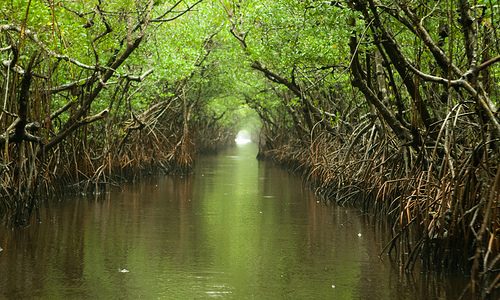
In addition to the nature trails at Briggs Nature Center, kayak and canoe rentals are also available. This allows guests to navigate the Gordon River, mangrove tree islands, and tunnels.  This is a great way to see birds and other wildlife in the area from the water.

Kayaking the mangroves
Kayaking in Briggs Nature Center

The Boardwalk is open year-round from dawn to dusk. Conservancy volunteers are on the boardwalk seven days a week from January through April, 9 a.m. to 12 p.m.  Schedules may change in inclement weather and on holidays. Guided tours take place at 10 a.m. daily from January through March.

Signs along the walk describe the flora and fauna in each community. Volunteers are available to help visitors spot and identify plants, birds and other animals.

The walk is a Great Florida Birding Trail site.

Briggs Nature Center
Rookery Bay in Naples
401 Shell Island Road, Naples, FL
(239) 337-3332

To see other recommended activities near Marco Island, FL, visit https://seamarcondo.com

The Fascinating Behavior of the Brown Pelican

Marco Island Brown Pelican
Home » Bird Watching on Marco Island

Key Takeaways

  • The Brown Pelican features an oversized bill and is known for its impressive diving skills.
  • Brown Pelicans primarily feed by diving into the water and can hold up to 2.6 gallons of water in their throat pouch.
  • These sociable birds breed in colonies and maintain monogamous relationships during the breeding season.
  • Once endangered due to pesticide use, Brown Pelican populations have recovered since bans on harmful chemicals like DDT.
  • Human activities still pose threats to pelicans, including habitat disturbance and fishing gear entanglement.

The Brown Pelican

Brown Pelican

The Brown Pelican is a has an oversized bill and can be quite elegant and comical to watch. They glide above the Gulf waters rising and falling with the waves. 

 Brown pelicans are impressive divers.  They can circle up to 60 feet above the surface. Then, they plunge headfirst underwater in search of food.

Feeding Habits of Brown Pelicans

This magnificent bird’s trachea (windpipe) and esophagus (tube connecting throat and stomach) are located on the right side of its neck. A foraging pelican spots a fish from the air.  It dives, tucking and twisting to the left to protect its trachea and esophagus from the impact. As it plunges into the water, its throat pouch expands to trap the fish.  Its pouch can fill with up to 2.6 gallons of water. Pelicans usually feed above estuaries and shallow ocean waters within 12 miles of shore.  These birds occasionally feed by sitting on the surface and seizing prey with their bills. This is usually when a dense school of fish is close to the surface. The water is shallow and muddy. They also steal food from other seabirds, scavenge dead animals, and eat invertebrates such as prawns.

With an awkward gait on land the pelican seems “clumsy”.  However, Brown Pelicans are masterful fliers and strong swimmers. They fly to and from their fishing grounds in V-formations or lines just above the water’s surface. Pelicans usually forage during the day.  They may feed at night during a full moon.

Pelicans are Highly Sociable

Highly social all year, pelicans breed in colonies of up to several thousand pairs. The male defends a nest site for up to 3 weeks until he attracts a mate. The pair is monogamous throughout the breeding season. The parents incubate their eggs with their feet. If disturbed suddenly they fly hastily, sometimes crushing their eggs. Pelicans regurgitate predigested fish onto the nest floor for their nestlings.  They later switch to whole fish once the young are big enough to eat on their own. The young can fly and fend for themselves after 3 months.  A young pelican takes 3–5 years of age to reach sexual maturity.

Brown Pelicans No Longer Endangered 

Wildlife conservation has been very important to the Brown Pelican. They nearly disappeared from North America between the late 1950s and early 1970s, mainly due to pesticides. The pesticide endrin killed pelicans outright, while DDT contamination led to thin-shelled eggs that broke under the weight of the parents. In 1970, Brown Pelicans were federally listed as endangered. This, and the extinction of other bird species, led to a ban on DDT in 1972 and a reduction in endrin use. This allowed pelican numbers to rise. By 1985, numbers along the Atlantic and Gulf coasts had risen enough to no long be listed an endangered.

Threats From Humans

There have been strong increases in the pelican population since the 1960s, but they still face human-caused threats. Disturbance from human activity in their coastal nesting habitats cause problems.  Panicked pelicans can abandon or accidentally destroy their nests. The brown pelican is protected by the Migratory Bird Treaty Act.

Another threat is abandoned fishing line, threatening this species along with other marine animals. It has been estimated that more than 700 pelicans die each year in Florida alone from entanglement in sport-fishing gear.

Cool Facts
*While the Brown Pelican is draining the water from its bill after a dive, sea gulls often try to steal the fish right out of its pouch.

*Pelicans incubate their eggs with the skin of their feet, standing on the eggs to keep them warm. In the mid-twentieth century the pesticide DDT caused pelicans to lay thinner eggs that cracked under the weight of incubating parents. They almost disappeared from North America during this time.  In the 1960s and 1970s, pesticide regulations made it possible for pelicans to once again populate our shores.

*During a dive, the Brown Pelican tucks its head and rotates its body to the left. This maneuver is probably to cushion the trachea and esophagus—found on the right side of the neck—from the impact.

*The oldest Brown Pelican on record was 43 years old.

*Brown Pelicans live year-round in estuaries and coastal marine habitats along both the east and west coasts. On the Atlantic and Gulf coasts they breed mostly on barrier islands, natural islands in estuaries, and islands made of refuse from dredging.  In Florida and southern Louisiana they primarily use mangrove islets.

*Brown Pelicans mostly eat small fish that form schools near the surface of the water—including menhaden, mullet, anchovies, herring, and sailfin mollies.

Visit our website https://seamarcondo.com for more information on Sea Mar Condo, Marco Island, FL. We want to make your vacation on Marco Island a trip of a lifetime!