19th Floor Penthouse Condos with Spectacular Views of the Gulf Waters
Hiking Trails Marco Island
Discover the best hiking trails in Marco Island for an unforgettable outdoor adventure. Explore stunning natural landscapes and breathtaking views. Get our recommendations for hikes in the area and tips on when to hike and what to take with you.
Rookery Bay Learning Center is a 16,500 square-foot facility near Marco Island, offering educational and recreational activities.
The center features various research labs, hands-on exhibits, and a visitor center with marine life experiences.
Visitors can enjoy guided tours, including kayak and boat tours, to explore the unique ecosystems and wildlife.
Programs like Science Saturdays and Kids Free Fridays provide interactive learning experiences for families.
The center operates Monday to Friday from 9:00 am to 4:00 pm, and additional information is available at their website.
Just 10 minutes from Marco Island is Rookery Bay Learning Center. It is a 16,500 square-foot facility. The center offers educational and recreational activities. Rookery Bay National Estuarine Research Reserve is also one of the few remaining undisturbed mangrove estuaries in the United States. The learning center has four research laboratories. In addition, there is a two story visitor center and 140 seat auditorium. The visitor center offers a variety of hands-on experiences. These include aquariums and interactive exhibits addressing ongoing research and stewardship within the reserve. There is also a nature store, gallery, and picnic area.
The educational center has 3 “focus” tanks, one oyster tank, and a seagrass tank. It also features a 180 gallon marine life exhibit and a 2,300 gallon mangrove tank. The observation bridge, 1/2 mile “Snail Trail”, and viewing platform encourage visitors to explore the surroundings. As they explore, visitors may see manatees, tarpon, and even sharks when conditions are right. Visitors can experience a short walk through tangled mangroves, palms, and oaks. These feature resurrection ferns, bromeliads, and orchids growing in oak tree bark. The trail also winds past an old homestead, dating back to post-Civil War times.
The estuary is an area where rivers and streams meet the sea. It forms a unique habitat with a myriad of wildlife, including 150 species of birds. Many threatened and endangered animals also thrive in this and the surrounding 10,000 island area of Southwest Florida.
Programs and Tours
Rookery Bay Hiking Trail
Rookery Bay Learning Center offers many opportunities for visitors to explore and learn:
Science Saturdays: Families learn about environmental science and the natural world. Visitors also get hands on experiences with marine-life touch tanks and scientific displays. Science Saturdays are from 9 am to 4 pm October through April.
Kids Free Friday Summer Program: From mid June to early August Kids Free Fridays provides free admission for children 12 and younger with a paid adult. Weekly topics include sharks, manatees, sea turtles, and birds. Program activities include story time, naturalist lecture, and craft room. In addition, there’s face painting. A food truck is also on site from 11 am to 1 pm.
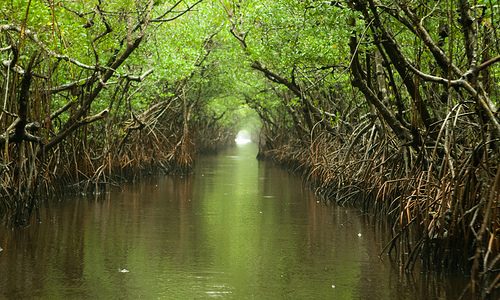
Guided Sunset Bird Rookery and Mangrove Tunnel Kayak Tours: Visitors can paddle through magnificent mangrove tunnels and shallows. This is a 2-3 hour guided kayak tour. This tour offers the opportunity to see sea stars, large snails, birds, dolphin, and manatee. Prior kayaking experience is not required. Tours offer single and tandem kayaks. The tandem kayaks accommodate children ages 3 and up. Tours are offered daily and registration is required.
Guided Boat Tours of Rookery Bay: A relaxing boat tour offers an up-close and personal experience. Visitors can explore this unique coastal environment. The tour is led by Rookery Bay staff with an emphasis on learning. Five different tours are offered. Each has a different theme. The tours provide a chance to see native wildlife. Additionally, they are a great opportunity for photography.
Hours and Contact Information
Hours: 9:00 am – 4:00 pm, Monday – Friday year round. https://rookerybay.org (239) 530-5940
Click here for a video on Rookery Bay:
We recommend a visit to Rookery Bay for our guests at Sea Mar Condo. Sea Mar Condos are in Marco Island, FL. They are located on the 19th floor of South Seas Tower 3 and Tower 4. You will enjoy beautiful views of Crescent (South) Beach and the Gulf waters. Visit our website to see availability and rates. Also, contact us for the vacation of a lifetime! https://seamarcondo.com
A Big Cypress Swamp Walk offers fantastic photography opportunities in a unique natural setting.
Guided eco-swamp tours are led by photographer Clyde Butcher, showcasing the vibrant wildlife and serene environment of Big Cypress National Preserve.
The leisurely tour lasts about two hours and is customizable based on interests and physical ability.
Recommended items include long pants, a hat, bug spray, water, snacks, and a change of clothes.
Tour rates vary: $125 each for two people, $117 each for three people, and $95 each for four or more.
A Big Cypress Swamp Walk could be exactly what you are looking for, especially if you are wanting to get some great photographs!
For the more adventurous of our Sea Mar Condo guests, what about a Swamp Walk? I have to admit I haven’t done this and probably will not. However, I do know people that have done this and loved it. I hear the photography opportunities are awesome in the Big Cypress area.
Take a Big Cypress Swamp Walk (239) 695-2428
Tours
Tours are located behind Clyde Butcher’s Big Cypress Gallery along the scenic Tamiami Trail (U.S.41) about half mile east of the Big Cypress National Preserve Oasis Visitor Center.
Ok…For those of you who are ready for some adventure…here it is!
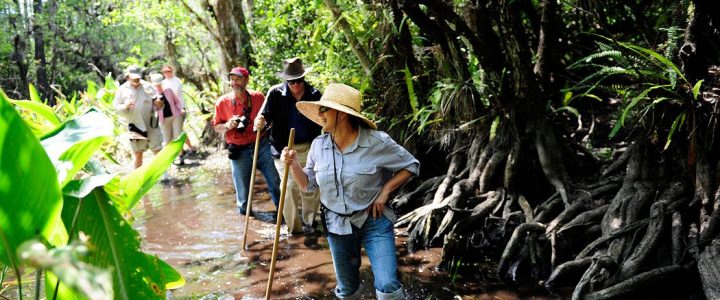
A Big Cypress Swamp walk is a getaway and a thrill! Clyde Butcher, an Everglades photographer, leads a guided eco-swamp tour through the swamps of Big Cypress National Preserve behind his gallery. Guests traverse through a rarely seen world, one with vibrant colors and mysterious sounds. Imagine what it is like experiencing the serenity of nature in the purest form.
This is a leisurely eco-tour tailored to match your interests and physical ability. Walks are approximately 2 hours long. Clothing suggested is long pants, hat, and old tennis shoes. We also recommend bringing bug spray, a water bottle, lunch or snacks, and a complete change of clothes.
Rates: Two people – $125 each, Three people $117 each, For people $95 each.
Visit our websitehttps://seamarcondo.com for more information on Sea Mar Condo, Marco Island, FL. We want to make your vacation on Marco Island a trip of a lifetime!
Everglades National Park is a unique ecosystem known as a ‘River of Grass’ and is crucial for Florida’s fresh water supply.
The park features diverse wildlife, including endangered species like the Florida panther and the American crocodile.
Visitors can enjoy various activities including airboat tours, hiking trails, and educational experiences at visitor centers.
The best visiting season is from December to March, when the weather is cooler and less humid.
The park is only a 45-minute drive from Marco Island, making it an ideal location for a day trip to Everglades National Park.
Everglades National Park
A River of Grass
Everglades National Park is a “River of Grass”. Others call it a swamp. It is a long, shallow river nearly 50 miles wide and about 100 miles long. The dominant life form in the “river” is periphyton. This is a mossy golden-brown substance found floating in the water. Periphytonis a complex mixture of algae, cyanobacteria, heterotrophic microbes, and detritus. It attaches to submerged surfaces in an ecosystem. It also serves as an important food source for invertebrates, tadpoles, and some fish.
Sawgrass marsh makes up about 70 percent of the Everglades. In the northern Everglades it is tall and dense. This makes some areas of water barely visible. In the south it tends to be short and less dense. Sawgrass has serrated, razor sharp blades that can cut through clothing.
Turner River Road, Everglades National Park
Everglades National Park is much smaller today than in years past. Construction and drainage projects are a factor in the reduction of around 50% of the wetlands. Thus, the restoration of the Everglades has been and is an issue for many political debates. Both state and federal governments are working to restore and protect the Everglades.
The Past
Calusa (kah LOOS ah) Indians lived on and controlled most of the southwest coast of Florida. The Everglades were central to life in the Indian villages. Many were located on the mouths of rivers above the Everglades. The natives traveled by canoes through the Everglades. They hunted alligators, turtles, shellfish and small mammals. These were essential to their food supply. The teeth and bones of wildlife and reeds from plants were used for making tools. The Native Americans called the area “Pahayokee (pay-HIGH-oh-geh). This means “grassy waters”. The Calusa declined with European expansion to the area. Some were killed. Most died of diseases brought in by the European settlers.
Everglades National Park Weather
There are two seasons in the Everglades: wet and dry. This results in the alternating periods of flood and drought.
The wet (summer) season accounts for around 80% of the average annual rainfall in the area (50+ inches). It lasts from May through November. The humidity and temperatures (90+F) are high. Most afternoons have thunderstorms (and occasional hurricanes). The rainy season is important in renewing the fresh-water supply. Hurricanes can be good for the ecosystem. They make new areas for plant growth. Seeds also scatter, and storms cause water movement in the normally shallow, slow moving river. Recent hurricanes have impacted the Everglades (Katrina, Rita, and Wilma, Irma).
Rainfall is the primary method water enters the Everglades. Evapotranspiration accounts for 70-90% of the rainfall leaving the area.
The dry (winter) season is December through April. It brings cooler temperatures (55F-77F) and little rain. The dry season is especially important for the reproduction of the birds and wildlife in the area.
Fire
The dry season causes drought conditions that are perfect for fires. The Florida Everglades have recently experienced fires around the Big Cypress National Preserve. Although fire may seem to be a destructive element to nature, most often it is not. Fire is essential for maintenance and also new growth of the land.
Environmental factors are always changing the ecological system. The climate and frequency of rain, storms, and fire all change the Everglades on a continual basis.
Everglades Water Supply
Approximately one third of people living in Florida rely on water from the Everglades for their fresh water supply. This makes protecting the Everglades extremely important.
Plant Life in Everglades National Park
Wet sawgrass prairies and periphyton are plentiful in the Everglades. The river holds mangrove and cypress swamps, pinelands and hardwood hammocks. Hammocks are dry land that rise out of the grassy river. Tropical and subtropical trees such as the southern live oak grow on them.
The oldest and tallest trees in the Everglades are cypresses. They have roots especially adapted to grow underwater. Big Cypress Swamp is well known for its 500 year old cypresses.
Everglades National Park is home to at least 350 species of birds, 50 reptile species, 300 species of saltwater and freshwater fish, and 40 species of mammals. In addition, the ecosystem provides protection for 14 endangered and nine threatened species, including the Florida panther, the Atlantic Ridley turtle, the leatherback turtle, the West Indian manatee, the snail kite, the Cape Sable seaside sparrow, and the American crocodile. There are at least 36 species that live in Everglades National Park that are on the protected, threatened, or endangered list.
The Everglades are a refuge for large wading birds, such as the wood stork, great blue heron, egrets, and the roseate spoonbill and it is the most important tropical wading bird breeding ground in North America.
This area is the only place in the world where alligators and crocodiles co-exist together in the wild. Crocodiles are in small numbers in the coastal areas of the Everglades. On the other hand, alligators stay more inland, near the freshwater.
Even mosquitoes play an important role to the Everglades. The larvae of grown mosquitoes are food for fish. Then, the larvae become an important food source to the diets of the wading birds.
Pythons have become an invasive species to the area. Recently, professional trained python bounty hunters are helping to help remove these large snakes from the area because they pose a threat to the ecosystem food source.
Wading Birds, including a Pink Spoonbill in Everglades National Park
Visitors to Everglades National Park
More than one million people from all over the world visit The Florida Everglades every year. It is the third biggest national park in America. Only Yellowstone and Death Valley are greater in land mass. Everglades National Park provides a fantastic learning experience to those of all ages and is also a great family adventure. Photographers find the landscape and the wildlife the perfect setting for great photos.
The busy visitor season is from December through March because it is the driest time of the year. The temperatures are also cooler, and there are fewer mosquitoes.
If you are considering a trip to the Everglades, be sure to bring along water and an insect repellant. Protective clothing may also be necessary depending on what you are doing or where you are going.
Everglades National Park Visitor Centers
Everglades National Park has 4 Visitor Centers
Shark Valley Visitor Center
Address: Everglades National Park, 36000 SW 8th St, Miami, FL 33194
Hours of Operation 8:30 a.m. – 5:00 p.m. Mid-December – Mid-April 9:00 a.m. – 5:00 p.m. Mid-April – Mid-December Hours are subject to change. Phone 305-221-8776.
Visitors wanting to explore alone the area can walk the short trails and portions of the tram road, or bike. In addition, an observation tower located halfway around the tram road provides a spectacular view into the sawgrass marsh.
Guided tram tours, bicycle rentals, snacks and soft drinks are available from Shark Valley Tram Tours, Inc.
Shark Valley Trails:
Bobcat Boardwalk: sawgrass slough and tropical hardwood forests
Otter Cave Hammock Trail: tropical hardwood forest with small footbridges over a small stream.
Tram Road: flat, paved road used for tram rides, bicycling, and walking. You may see alligators, herons, egrets, turtles, and snail kites. An observation tower also provides panoramic views of the tropical hardwood hammock.
Ernest F. Coe Visitor Center (Park Main Entrance)
Address: Everglades National Park, 40001 State Hwy 9336, Homestead, FL 33034
Hours of Operation Mid-December through Mid-April 8 a.m. – 5 p.m. Mid-April through Mid-December 9 a.m. – 5 p.m. Hours subject to change. Phone (305) 242-7700
The Ernest F. Coe Visitor Center is open 365 days a year. It offers educational displays, orientation films, and informational brochures. Also, special collections by local artists are often on display. In addition, books, film, postcards, and insect repellent may for purchase in the adjoining bookstore. A short drive from the visitor center is a series of popular walking trails. The main park road runs 38 miles from the Ernest Coe Main Entrance through the park to the Flamingo Visitor Center.
Trails from Ernest F. Coe Visitor Center:
Anhinga Trail: Four miles from the main entrance, the Anhinga Trail is a self-guided 0.5 mile round trip trail. It winds through a sawgrass marsh, where you may see alligators, turtles, herons, egrets, and other birds, especially during the winter. Because of the wildlife, this is one the most popular trails in the park.
Gumbo Limbo Trail: This self-guided, 0.5 mile round trip tail is 4 miles from the main entrance. The paved trail meanders through a shaded hammock of gumbo limbo trees, royal palms, ferns, and air plants.
Pahayokee Overlook: Located 13 miles from the main entrance the trail is 0.25 miles. An observation deck on this loop provides views of the Everglades.
Mahogany Hammock Trail: Located 20 miles from the main entrance this trail is 0.5 miles round trip. It is a self-guided boardwalk that meanders through a dense hardwood hammock with gumbo-limbo trees, air plants. Another significant feature of this trail is the largest living mahogany tree in the United States.
Alligators are Commonly seen in Everglades National Park
Flamingo Visitor Center
Address: Everglades National Park, 1 Flamingo Lodge Hwy, Homestead, FL 33034
Hours of Operation 8am – 4:30pm mid-November through mid-April No regular hours off season – intermittent staffing (Mid-April through mid-November).
Hours are subject to change. Phone (239) 695-2945
The Flamingo Visitor Center lies roughly 38 miles south of the park main entrance at the Ernest F. Coe Visitor Center. Visitors should expect to drive about an hour before arriving at Flamingo.
The Flamingo Visitor Center offers educational displays, informational brochures, and backcountry permits. Campground facilities, a public boat ramp, a marina store, and hiking and canoeing trails are also located near the visitor center.
Flamingo Marina Rentals and Boat Tours (239) 695-3101 Houseboat, canoe, kayak, bicycle rentals and boat tours are available through the marina store. The marina is open year round.
Flamingo Trails:
West Lake Trail: Located 7 miles north of the Flamingo Visitor Center on the park road, this is a 0.5 mile round trip trail. It is a self-guided boardwalk trail. The trail leads to a forest of white mangrove, black mangrove, red mangrove, and buttonwood trees to West Lake.
Eco Pond Trail – Near the Flamingo Visitor Center this 0.5 mile round trail allows visitors to walk around a freshwater pond while watching wading birds, song birds, ducks, alligators and softshell turtles.
Gulf Coast Visitor Center
Address:815 Oyster Bar Ln, Everglades City, FL 34139
Hours of Operation 9:00 am to 4:30 pm Mid-April- Mid-November 8:00 am to 4:30 pm Mid-November – Mid-April Hours subject to change. Contact by Phone: 239-695-3311
The Gulf Coast Visitor Center serves as the gateway for exploring the Ten Thousand Islands. The islands are a maze of mangrove islands and waterways extending to Flamingo and Florida Bay. Thus, they are accessible only by boat.
The visitor center also offers educational displays, orientation films, informational brochures, and backcountry permits.
Boat tours and canoe rentals are available. Restaurants and stores are located nearby.
Activities:
Ten Thousand Islands Boat Tour: (1 ½ hours, fee charged). Discover the Ten Thousand Islands of the Gulf Coast. Naturalists offer narrated boat tours on a year round schedule. Concessions are also available on the boats.
Everglades Highlights: (30 Minutes- held on the grounds in front of the Gulf Coast Visitor Center). Join the park staff for a short talk about important features of the Everglades. Ecological, historical and environmental issues are also part of the discussion.
Paddle the Wilderness: With a ranger as your guide, paddle through the Ten Thousand Islands to look at wildlife and mangroves while you learn about the park’s natural and cultural history.
*Reservations need to be made 7 days in advance. For reservations and further trip details, call the Gulf Coast Visitor Center at 239-695-3311.
An Airboat Tour is a Fun Way to Explore Everglades National Park
Airboat Tours
Three authorized airboat businesses offer professional airboat tours inside Everglades National Park. All three (Coopertown, Everglades Safari Park, and Gator Park) are located along US Hwy 41/Tamiami Trail between Miami and Shark Valley.
Personal Jet Skis and Airboats are prohibited due to safety issues
Swimming is not recommended due to low visibility and the presence of alligators and crocodiles in fresh water areas and sharks, barracuda and sharp coral in the salt water areas.
Visiting Marco Island and the Everglades
Because there is no public transportation available, visiting the Everglades from Marco Island requires a car.
Everglades City is a 45 minute drive from Marco Island. It is also the closest entrance to the Everglades from the island. Loop Road, which is a 16 mile drive (gravel road) offers visitors a chance to see the beauty of the Everglades and wildlife of the area. In addition, there are several airboat and swamp buggy rides and boat tours from Everglades City.
Everglades City Airboat Tours
Captain Jack’s Airboat Tours
Jungle Erv Airboat Rides
Captain Doug’s Airboat Tours
Wootens Everglades Airboat and Swamp Buggy Tours
As long as your are in this area, The Shark Valley Visitor’s Center is 40 miles past Everglades City where a tram ride is available.
Another fun adventure is a jet ski adventure from Marco Island around the Ten Thousand Islands of mangroves off Marco Island.
We highly recommend a day trip to Everglades National Park to our guests at Sea Mar Condo https://seamarcondo.com. The park is only a short 45 minute drive from the condo and is a great day adventure. On one of our recent trips there we saw almost 30 alligators and many wading birds (including a roseate spoonbill).
Explore several scenic boardwalk and nature trails close to Marco Island for a unique experience.
Briggs Nature Center offers a 0.6 mile loop, perfect for birding and accessible year-round.
Rookery Bay Boardwalk provides a 1 mile loop with diverse plant life and historical homestead attractions.
Bird Rookery Swamp features 12 miles of trails and diverse wildlife, including alligators and Florida panthers.
Corkscrew Bird Sanctuary showcases a 2.5 mile boardwalk and the largest old growth Bald Cypress forest in North America.
The are several boardwalk and nature trails close to Marco Island. These beautiful areas offer our guests to Sea Mar Condo an opportunity to see the varied landscapes and wildlife around the area. All of these boardwalks and trails are within an hours drive from Marco Island and are great day trips.
Briggs Nature Center Boardwalk Trail
This trail is a .6 mile loop trail with light traffic located near Naples. It offers scenic views and is good for all skill levels. The trail is accessible year round and is perfect for birding, hiking, walking, and nature trips. Dogs are allowed on the trail, but must be kept of leash.
Rookery Bay Boardwalk
Across from Walmart on Rt.951 (15 minutes away from Marco) , this trail is about a 1 mile loop. It’s close, easy, and offers great birding. Visitors can experience a brief trek through tangles mangroves, palms and oaks with resurrection ferns, bromeliads, and orchids growing in oak tree bark. The trail winds past an old homestead dating back to post-Civil War times.
Serenity Walk
Located on Route 951 nine tenths of a mile north of Rattlesnake Hammock Road. Serenity Walk Park is small but very interesting. The trail is dirt/sand and is a 1 mile loop winding around pine flatwoods and a cypress pine mixed forest.
Bird Rookery Swamp
This trail is located on Shady Hollow Road (45 minutes away from Marco). It offers 12 miles of hiking and biking trails and a 1500 foot boardwalk. The trails are old tram roads used when the area was logged many years ago. The maple-cypress swamp is home to alligators, otters, Florida panthers, bobcats, and white-tailed deer. The trail also is great for birding with many raptors and wading birds in the area.
Freedom Park
This park is located at 1515 Golden Gate Parkway in Naples (about 1/2 hour from Marco Island). Freedom Park includes a 5 acre lake with 3500 feet of boardwalk throughout the 50 acre park. It also has 6 lookout pavilions and numerous walking trails.
Corkscrew Bird Sanctuary
This sanctuary is located on Immokalee Rd. (About 50 minutes from Marco). The 2.5 mile boardwalk trail takes you through pine flatwoods, wet prairie, around a marsh, and into the largest old growth Bald Cypress forest in North America. The area is home to hundreds of alligators, otters, white-tailed deer and red-bellied turtles. A wide variety of wading birds, songbirds, raptors and the painted bunting can also been seen throughout the year. Guided walks are available.
Six Mile Cypress Slough Preserve
This slough is located on Six Mile Cypress Parkway near Ft. Myers (about an hour away from Marco). A Slough is a long, narrow wetland with slowly flowing freshwater. During the rainy time of year, the Slough catches and slowly filters rainwater on its way towards Estero Bay. Animals that have adapted to the wetlands, like alligators, turtles, otters, and wading birds, live at the Slough year-round. Additionally, many types of migratory birds use the Slough as a rest stop and feeding area. The park has 3,500 acres with wildlife, a butterfly garden, and boardwalk trails through wetlands.
We highly recommend these boardwalk and nature trails close to Marco Island to our guests! It’s a great way to take a break from beach activity to see mangroves and animal life. It is also an enjoyable way to get exercise while on vacation! We also recommend you take bug spray, especially during the rainy summer months and always wear sunscreen in the outdoors.
Visit our website at https://seamarcondo.com to see our rates and availability. Our website also provides more information on Sea Mar Condo and Marco Island. Let us help you make the most of your Marco Island vacation!
Briggs Nature Center offers 3 miles of trails, including a ½-mile boardwalk, for exploring diverse habitats.
Wildlife sightings include bald eagles, snakes, and otters, making it an excellent spot for nature enthusiasts.
Kayak and canoe rentals are available for navigating the scenic Gordon River and mangroves.
The Boardwalk operates year-round, with guided tours and volunteer assistance for wildlife spotting.
Briggs Nature Center is part of the Great Florida Birding Trail and located in Naples, FL.
Trails
Briggs Nature Center is located between Marco Island and Naples. It is part of the Rookery Bay National Estuarine Research Reserve. The nature center features a total of 3 miles of easy trails, including a ½-mile boardwalk. Guests are able to explore the area’s various habitats. The estuary is a natural nursery for fish, shellfish, and crustaceans. It is also home to many nesting birds.
In addition to the boardwalk, there are two other short trails that offer views of Rookery Bay. Wildlife such as bald eagles, snakes, bob-cats, river otters, hawks, and woodpeckers are quite commonly seen by visitors to the nature center.
Briggs Boardwalk is a half-mile self-directed nature trail. It passes through five unique habitats from scrub to brackish ponds. This walk is kid friendly. This is a great place for a family to enjoy a short, easy, free walk while experiencing the Florida marshes and wildlife.
Kayaking/Canoeing
In addition to the nature trails at Briggs Nature Center, kayak and canoe rentals are also available. This allows guests to navigate the Gordon River, mangrove tree islands, and tunnels. This is a great way to see birds and other wildlife in the area from the water.
Kayaking in Briggs Nature Center
The Boardwalk is open year-round from dawn to dusk. Conservancy volunteers are on the boardwalk seven days a week from January through April, 9 a.m. to 12 p.m. Schedules may change in inclement weather and on holidays. Guided tours take place at 10 a.m. daily from January through March.
Signs along the walk describe the flora and fauna in each community. Volunteers are available to help visitors spot and identify plants, birds and other animals.
The walk is a Great Florida Birding Trail site.
Briggs Nature Center Rookery Bay in Naples 401 Shell Island Road, Naples, FL (239) 337-3332