Key Takeaways
- Marco Island is famous for its beautiful beaches and unique wildlife, particularly the Burrowing Owls.
- Residents promote Burrowing Owl populations with help from the Burrowing Owl Society, ensuring protected nesting.
- These small, sandy-colored owls live in burrows that they dig or take from other animals, hunting insects and rodents.
- Burrowing Owls display interesting behaviors, such as storing food and attracting insects to their nests with dung.
- They have a distinct lifestyle, hunting during the day and night, often living in close colonies and showing monogamous tendencies.
Marco Island is known for its beautiful beaches. However, one thing that makes the island really special is its wildlife. One little creature is especially cute, and it is fairly easy to spot one on the island.
Many residents on Marco Island participate in encouraging the burrowing owl population. The Burrowing Owl Society provides starter packs for homeowners who want to encourage owls to nest on their property. The owls are protected when actively nesting. Nests are inspected regularly.
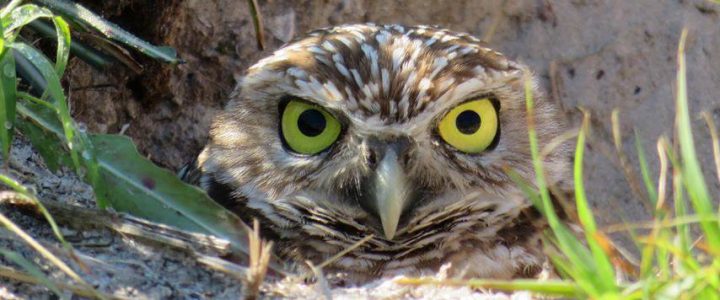
Owls are unmistakable birds, and that goes double for a long-legged owl that hunts on the ground during the day. Burrowing Owls are small, sandy-colored owls with bright-yellow eyes. They live underground in burrows they’ve dug themselves or taken over from a ground squirrel or tortoise. The owls live in grasslands, deserts, and other open habitats. They hunt mainly insects and rodents. Their numbers have declined sharply. This decline is due to human alteration of their habitat and the decline of ground squirrels.
Cool Facts About Burrowing Owls
 Unlike most owls in which the female is larger than the male, the sexes of the Burrowing Owl are the same size.
Burrowing Owls often stow extra food to ensure an adequate supply during incubation and brooding. When food is plentiful, the birds’ underground larders can reach enormous sizes.
In the absence of suitable homes created by ground squirrels or other burrowing animals, Burrowing Owls have been known to nest in piles of PVC pipe unintentionally provided by humans. Conservationists make use of the owls’ adaptability. They supply artificial burrows made of buckets, pipes, tubing, and other human-made materials.
Burrowing Owls have a higher tolerance for carbon dioxide than other birds. They spend long periods underground, where the gas can accumulate to higher levels than found above ground.
Nests of Burrowing Owls
Before laying eggs, Burrowing Owls carpet the entrances to their homes with animal dung, which attracts dung beetles and other insects that the owls then catch and eat. They may also collect bottle caps, metal foil, cigarette butts, paper scraps, and other bits of trash at the entrance. This can signify that the burrow is occupied.
The nest burrow can be several yards long and is usually less than 3 feet deep. Its size depends on the mammal that originally excavated it. Burrows tend to make numerous twists and turns, with a mound of dirt at the entrance and an opening at least 4–6 inches wide. The owls often line their burrow with livestock manure, sometimes with feathers, grass, or other materials. When owls dig their own burrows, the process may take several days. It takes them less time to prepare the burrow for nesting when they use an existing burrow.
Lifestyle of a Burrowing Owl
 Burrowing Owls hunt at all hours of the day and night. Usually staying close to the ground, they fly, hover, walk, or run, seizing prey in their talons. Between forays for food, they sleep on dirt mounds at their burrow entrances or on depressions in the ground.
Disturbed owls bob jerkily up and down, as do hunting owls pinpointing prey. They are mostly monogamous and breed close together in loose colonies. Females stay in or near the nest burrow until chicks fledge. Males tend to stand guard at a nearby burrow or perch. Males defend their territories against other males.
They do this by vocalizing, displaying in a weaving crouch with feathers fluffed, or chasing and attacking with outstretched talons. Courting adults—mainly males—display by circling overhead. They also fly dozens of feet into the air, hover for a few seconds, and then rapidly descend. Pairs vocalize, rub bills, and preen, with the male calling and presenting food to the female. Young owls play-hunt by jumping on each other, on prey brought by their parents, and on dung around the burrow.
Credit: The Cornell Lab of Omithology – All About Birds

Visit our website https://www.seamarcondo.com for more information on Sea Mar Condo, Marco Island, FL, and the island’s wildlife. We want to make your vacation on Marco Island a trip of a lifetime!