Key Takeaways
- Bird watching on Marco Island features species like ospreys, pelicans, and burrowing owls, making it a rewarding experience.
- The Great Florida Birding Trail includes Tigertail Beach Park and other nearby locations ideal for bird enthusiasts.
- The snowy egret and great blue heron are common sights on Marco Island’s beaches, offering great photo opportunities.
- Visitors can observe nesting least terns and black skimmers during their breeding seasons along the coast.
- Sea Mar Condo provides a perfect base for bird watching on Marco Island, with easy access to eco tours and scenic views.
Bird Watching on Marco Island
Marco Island’s beautiful birds are one of the island’s greatest assets. Bird watching on Marco Island is especially rewarding. There are many species native to the island.

I photographed this osprey posing on Tigertail Beach. These majestic birds are not normally people friendly. However, this one seems to enjoy the attention!! If you are like me, it is special to capture a beautiful photo. What a precious vacation memory! This osprey’s picture is in Sea Mar Condo for our guests to enjoy!
There are many birds which are native to Marco Island and the southern Florida area. Birds that are common on Marco Island include the white egret, osprey, pelican, bald eagle and burrowing owl.
The Great Florida Birding Trail
Tigertail Beach Park is located on the Great Florida Birding Trail. It is a nice place to see and photograph many species of birds. There are also other bird watching sites around Marco Island. They include Rookery Bay National Estuarine Research Reserve and Briggs Nature Center. Frank E. Mackle Jr. Park, Eagle Lakes Park and Sugden Regional Park are also good. It is a short 40 minute drive to Big Cypress Welcome Center. Turner Loop Road near Everglades City is also a great birding site.
Burrowing Owls on Marco Island

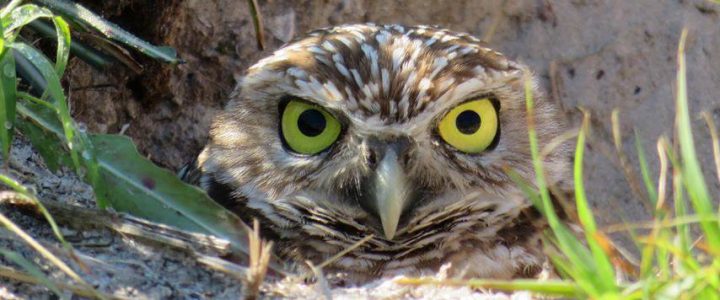
Marco Island has been recognized by the Audubon Society for their efforts to increase numbers of burrowing owls. The small owls are protected by both the state of Florida and the city of Marco Island. Many residents volunteer to adopt the owls. They offer protective housing (borrows) for these beautiful birds. The owls are given a wide roped off space, but are yet visible to visitors. Hint: They tend to pose for pics in the morning and late afternoon hours. See our related post Burrowing Owls on Marco Island. https://seamarcondo.com/burrowing-owls-on-marco-island
Osprey on the Island
Around Marco Island, you will likely see large osprey nests built of sticks. They are often on channel markers. Ospreys have a large brown back and a white underside. Visitors to Marco Island see these birds soaring around condo buildings and over the Gulf waters. They are very large with wingspans of between 4-5 feet. Ospreys soar above the shallow water along the beach. Then they hover briefly before diving feet first to grab a fish. The bird then takes off with its fish, carrying it back to its nest. It is not uncommon to see ospreys perched on a building. They are also commonr along the beach on driftwood in the Tigertail area.
Lots of Pelicans on Marco Island
Brown Pelicans

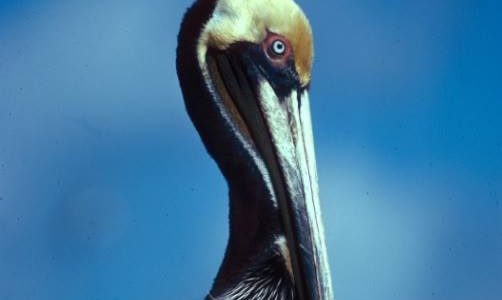
This is my favorite bird to watch on Marco Island! What fun it is to see these impressive divers circling high above the Gulf waters. I love seeing them dive headfirst in search of the perfect feast. Often you will see the brown pelicans fly in group formation. They normally fly in a V-shape along the water. Pelicans are plentiful on Marco. It is common to be in the water and see one swoop close by. The pelican expands its throat pouch (gullet) to trap fish, filling it with over 2 gallons of water. Then it enjoys a tasty meal! A friend of mine took the picture to the left as we left on a Marco Island Princess dinner cruise. This picture is also in Sea Mar Condo for our guests to enjoy! See our full article on The Brown Pelican at https://seamarcondo.com/marco-island-wildlifethe-brown-pelican.
White Pelicans

The White Pelican is the largest bird in North America.
More rare to spot on Marco Island are white pelicans. They arrive in the area in late fall and stay until the early spring. The white pelican has white feathers and a pink-tangerine colored bill. This beautiful bird is the largest bird in North America. Isolated areas like mangrove islands are preferred habitats. These birds are shy and less social. Your chances of seeing a white pelican are better during a boat tour of the 10,000 islands with binoculars. White pelicans work as a team to herd their food prey, fluffing their wings to assemble and gather the fish.
Bald Eagles on Marco Island

Marco Island Nature Preserve is home to the island’s nesting American Bald Eagles during nesting season. The preserve is located at 665 Tigertail Court, Marco Island, FL. This organization works alongside volunteers of Marco Island to guarantee the safety of active Bald Eagle nests. Visitors may visit during nesting season between November and May.
The Marco Island Nature Preserve & Bird Sanctuary also has a Facebook page https://www.facebook.com/MarcoIslandNaturePreserve. The page has lots of great information on these majestic birds and their activity.
Roseate Spoonbill

Birdwatching on Marco Island is more exciting with color! My favorite bird around Marco and the 10,000 island area is the roseate spoonbill. The spoonbill is a beautiful pink wading bird. Although rare to see on Marco, they are sometimes spotted near Tigertail Lagoon. Visitors taking eco tours of the 10,000 islands commonly get to see the roseate spoonbill. Besides Tigertail Lagoon, my sightings include one on a boat tour a few years ago and again on a drive along Turner Loop Road in the Everglades.
The roseate spoonbill has bright pink feathers and red eyes with a giant spoon-shaped bill. These birds are especially beautiful in flight flying with their outstretched necks. A couple of neat facts about the spoonbill: They bald as they mature by losing feathers from the top of their head. And, their pink color comes from the crustaceans they eat. The crustaceans contain pigments called carotenoids that turn their feathers pink.
See our related post on Exploring the Habitat of the Roseate Spoonbill: https://seamarcondo.com/marco-island-wildlife-the-roseate-spoonbill
Least Terns Nesting on Marco Island

The least tern is the smallest of the American terns. They grow to a length of 8 1/2 to 9 inches with a wingspan of 21-23 inches. Tigertail Beach on Marco Island is one of the largest least tern nesting areas in Southwest Florida. This bird has a gray back, black wings, a yellow beak and a white belly. It also has pointed wings and a forked tail. Least terns nest in colonies. They stay on sandy beaches with a path to the water. They are also a threatened species. Visitors to the island can walk along the north tip of Tigertail Beach during nesting season (April-August) and see large colonies of 200 or more least terns nesting. Roped areas protect the nests. Signs give warnings to keep a distance from nesting birds.
Black Skimmers on Marco

Black skimmers are on Marco Island year round. The island has the largest black skimmer colony in the state of Florida. Many black skimmers on Marco are banded to track movements, lifespans, and survival rate. Black skimmers nest in large colonies around April-August on Tigertail Beach. Visitors to Big Marco Pass during nesting season can see colonies of 400 or more black skimmers. Roped areas keep visitors a safe distance from nesting birds. Although normally a calm bird, the black skimmer will dive bomb anything getting close to a nest of newly hatched chicks. During the winter months, visitors to the island will see black skimmers resting on the beach.
The black skimmer has a wingspan of around 45 inches. They have a black back, white belly, orange-red legs, and a black-and-red bill. Orange color on their bill and legs make them easy to spot. Black skimmers fly very low above the water.
Snowy Egrets Along the Beach

It’s not often you walk along Marco Island’s beautiful beaches without one of these guys joining you! They are known for their “strut” and “ruffled feathers”. The snowy egret can become quite comical in their appearance. (Makes for a great photo!) The snowy egret is a water bird. They are around 26″ tall with white feathers and a black bill. It has black legs and bright yellow feet. In spring, the egret has “fancy” lace-like feathers on its head and along its back for its showy displays of courtship. Marco’s snowy egrets are very used to people. They will virtually “walk the beach” with you!
Great Blue Heron

The great blue heron is the tallest of the wading birds. It is slate blue in color with a white head, a black stripe above the eye, and a yellow bill. This bird has a wing span of 65-79 inches. Blue herons are solitary birds that are normally seen standing motionless in shallow water. Tigertail Lagoon is a good place to look for this bird. Taking an eco tour or a drive to the Everglades along Turner Road is also a great way to see a great blue heron.
Anhinga (Piano Bird)

The Anhinga is a most unusual bird. It swims with its webbed feet. They also dive under water, and spear food by rapidly stretching out the neck. Anhinga’s feathers are not waterproof as other types of water birds. Their feathers get soaked when they are submerged in water, thus they cannot stay in the water for long periods of time.
The bird stands with it’s feathers fanned out to dry. Anhingas also pridefully sit in trees with outstretched wings until they are dry enough to fly. The male anhinga is glossy black with white tail feathers. When outstretched, the bottom of the male’s wings have white strips that resemble piano keys. They are sometimes called “piano birds”. The female is pale gray in color or light brown. I took the picture of this bird at the Big Cypress Welcome Center along the boardwalk.

Sea Mar Condo is the Perfect Place to Stay for Bird Watching on Marco Island

Sea Mar Condo is located on the south end of Tigertail Beach and the north end of Marco Island’s South (Crescent Beach). Our 19th floor penthouse condo overlooks South Beach. It has beautiful views of the beach and Gulf waters. We are a short 40 minute drive to Big Cypress National Preserve and Everglades City. There are many guided eco tours of the 10,000 islands. All of these areas are perfect for bird watching on Marco Island (and surrounding areas). Visit our website https://seamarcondo.com for more information on Marco Island and Sea Mar Condo. We would love to have you as our guests!